
Viscosity Selection in Silicone Oils: How to Choose the Right ALSİLON Grade
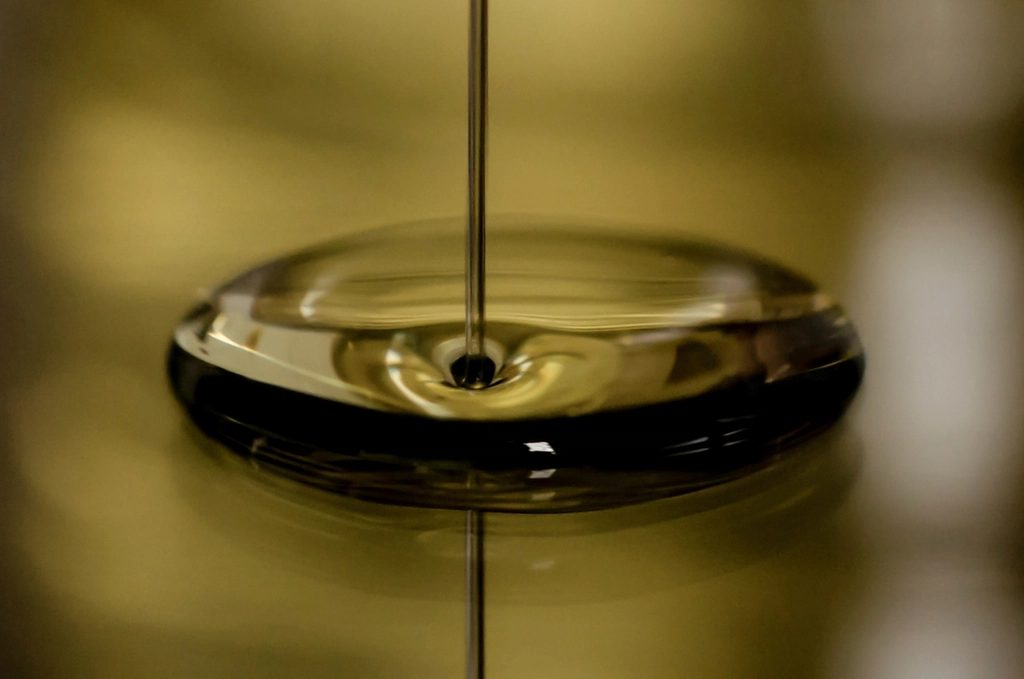
Viscosity is one of the first values formulators check on a silicone oil's technical data sheet. Viscosity is a liquid's internal resistance to flow; for silicone oils it is usually expressed as kinematic viscosity measured at 25 °C, in centistokes (cSt = mm²/s). Dynamic viscosity (cP) is obtained by multiplying kinematic viscosity by density; for dimethyl silicone oils, whose density is close to 1 g/cm³, the two values are quite similar.
In dimethyl silicone (PDMS) oils, the main factor that determines viscosity is polymer chain length. As the chain grows longer, molecular weight and viscosity increase, while core properties such as low surface energy, water repellency, and chemical inertness are largely retained. This makes it possible to achieve different application behaviors within the same chemistry simply by changing the viscosity.
In practice, viscosity directly affects three behaviors: flow and dosing, spreading on the surface, and the durability of the resulting film. Low viscosity oils are easier to pump, spread quickly, and leave a thin, light film. High viscosity oils spread more slowly but form a thicker, more durable film that provides long-lasting slip and protection.
An important advantage of silicone oils is that their viscosity changes much less with temperature than that of mineral oils. This means more predictable performance across different process temperatures. Even so, the operating temperature range and mixing conditions should always be taken into account when selecting a grade.
The ALSİLON series offers stepped viscosity options to match these needs. TH100, with its low viscosity and easy dispersion, suits applications that require a thin film and fast spreading; TH180, with medium viscosity and thermal stability, suits varying process conditions; and TH200, with its balanced viscosity profile, suits a broad range of applications. TH280 and TH300 are developed for demanding formulations that require high viscosity and a durable, long-lasting film.
A few questions help identify the right grade: How will the product be applied (spraying, dipping, mixing)? Is the target film thin and light, or thick and durable? How compatible is it with the other components of the formulation? At what temperature does the process run? As a general rule, applications that need fast spreading and spraying lean toward low viscosity, while those that need a durable barrier and protection lean toward high viscosity.
When an intermediate viscosity is required, blending different viscosity grades of the same chemistry is a common approach. Testing and validating such adjustments at laboratory scale first is the safest way to achieve repeatable results in production.
The Altera Kimya technical team provides samples, Technical Data Sheets (TDS), and application support to help you identify the most suitable ALSİLON grade. For exact viscosity values and tolerance ranges, please review the relevant product's TDS or contact our team.
Tags